News Briefs: Chairman Guerra softens language on refinery, new report projects flooding between buoys and border wall
Port of Brownsville tempers claims about the proposed oil refinery's environmental safety, while a new study warns Trump’s National Defense Area could cause severe flooding on the Rio Grande.

News briefs
This is a regular news brief we publish for the Rio Grande Valley on Across The Americas. Questions and story ideas: newsroom@acrosstheamericas.com
'I’m not saying that there is not going to be smoke' — Navigation District Chairman softens language on oil refinery
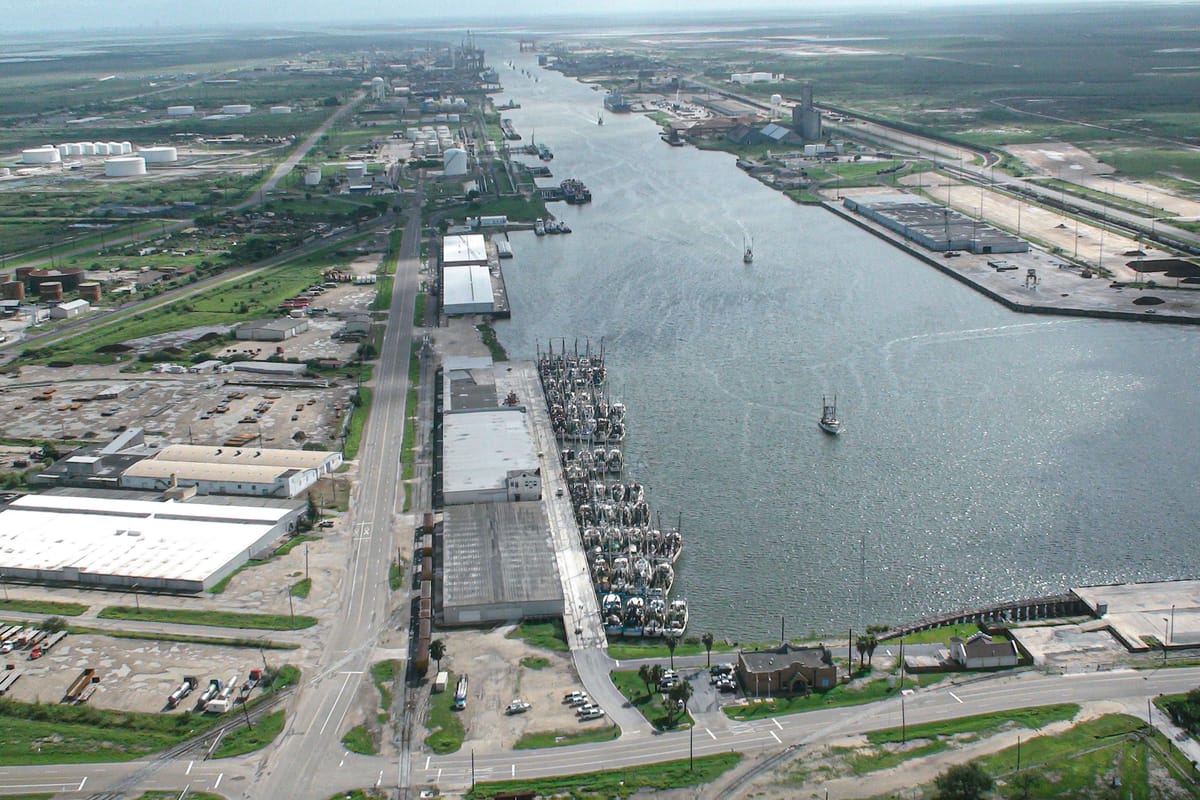
“America First is going to have to come and explain to our people and let them know what technologies are actually going to be implemented,” chairman of the Brownsville Navigation District, Esteban Guerra, told ValleyCentral outside of a press conference on Wednesday about the oil refinery project re-announced this week at the Port of Brownsville by President Trump.
Guerra seemed to soften the port’s language on the project outside of the media briefing, saying, “I’m not saying that there is not going to be smoke”, a tonal difference from port Director and CEO William Dietrich’s press conference statement that the facility will not be “the refinery of the past, where you drive down the road and you see smoke stacks for miles as you're going down the freeway.”
A state regulatory notice from 2017 about the refinery’s proposed air-quality permits says the facility will emit “in a significant amount” carbon monoxide, nitrogen oxides, volatile organic compounds, sulfur dioxide, hazardous air pollutants, hydrogen sulfide, sulfuric acid mist, and particulate matter as small as 2.5 micrometers, a category of particulates known as PM2.5, which can enter the bloodstream through the lungs.
“There's been a lot of attention paid by the Commission to our social responsibility and how we bring a project into the community,” Dietrich said. “A lot of this has been weighed out. We have seen this technology, and we are very, very sure that this technology is what they say it is, which is the cleanest refinery in the nation.”
Still, the port seemed to be able to offer few technical details at the press conference about the environmental and health impacts of a project that “has been going on for about 12 years”. When asked for an estimate of the amount of pollutants that will be released by the new refinery, Dietrich responded, “No, we do not have that. We do not have that estimate.”
The recent announcement by Trump comes as the White House reins in the fallout from the U.S.-led conflict in Iran that is destabilizing gas prices in an election year.
Across The Americas is the newsletter of independent journalism from the Rio Grande Valley.
A new report shows combining border walls and buoys could create unprecedented flood threats
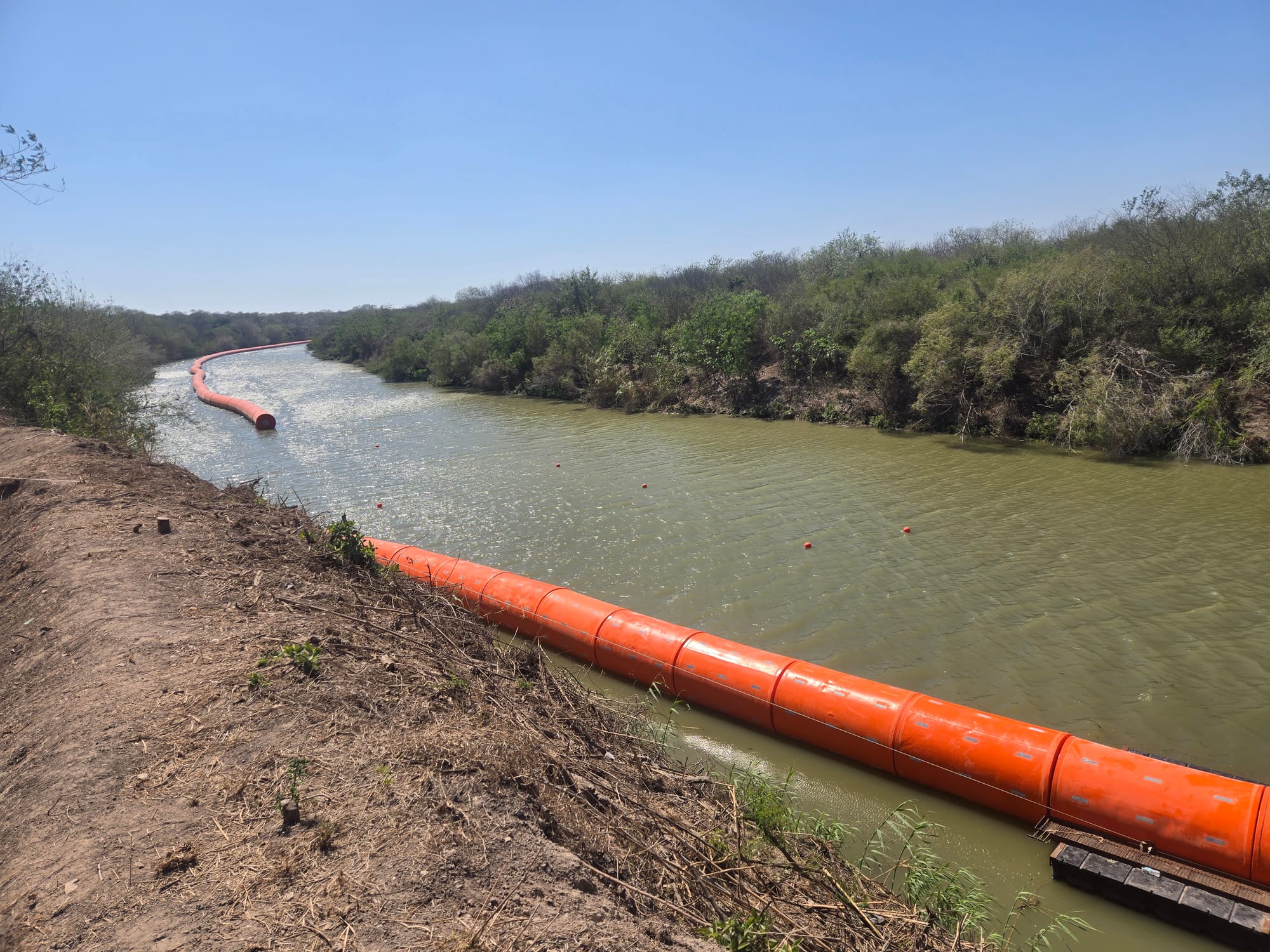
A new report by the Rio Grande International Study Center projects that plans to combine a border wall with floating buoys as part of the Trump administration’s border security strategy, will lead to catastrophic flooding.
Mark Tompkins, PhD, a fluvial geomorphologist with nearly three decades of experience studying rivers in the United States, says the structures could trap debris, raise water levels, and strain existing flood-control systems in Webb and Zapata counties.
"The combination of wall and buoys is a ticking time bomb,” Tompkins explains in the report. "Installing something like this in a major river with huge flood flows is unprecedented."
The same structures have already started being put in place on the Rio Grande, with plans to cover the river from Brownsville to Roma, as part of Trump’s National Defense Area in the Rio Grande Valley.
“Portions of the proposed wall and buoy system will fail during extreme high flows," said Tompkins. "Failures will cause catastrophic flooding, damage, and destruction to property, and risks to the health and safety of people near the river corridor."
Tompkins is presenting his findings to a Laredo city advisory group later today.
Democrats Eye Texas-23 After GOP Turmoil
From the Texas Tribune today: Democrats think they might have a chance to win the traditionally Republican 23rd Congressional district after Rep. Tony Gonzales was pushed out of the race by his own party following allegations of an affair with a staffer who later died by suicide.
The Democratic nominee, Katy Padilla Stout, is a Texas attorney, educator, and community advocate, and Democrats see her as more competitive than her Republican opponent, Brandon Herrera, a controversial and provocative online figure.
Read the full story: With Tony Gonzales out, Democrats sense an opening against new hardline GOP nominee Brandon Herrera
More stories this morning:
Running on faith: The message powering James Talarico’s Democratic win
(Houston Public Media)
A Battle Over Texas Beaches Could Ground Elon Musk’s Rockets
(Texas Monthly)
Events: Environmental Forum Tonight

Environmental advocates are meeting in Brownsville today for a forum on renewable energy, following Trump’s announcement of a new oil refinery at the Port of Brownsville.
Environment Texas, Sierra Club, South Texas Environmental Justice Network, Climate Cabinet, Sunrise Movement RGV & BESS TX will be at the forum from 6:00 pm to 8:00 pm at the eBridge Center for Business & Commercialization.
RSVP: https://docs.google.com/forms/d/1PpbkK48-dNr54IXQhA1Kpsw-lyCRHkiyQZX8dQu_C9g/
About Across the Americas

Across The Americas is the newsletter of independent journalism from the Rio Grande Valley, covering the Texas-Mexico region and the deep roots its people share across the continent.
Join four-time award-winning journalist Pablo De La Rosa as he reports on the global forces shaping these regional communities today.
Pablo's voice has appeared on NPR, MSNBC, Texas Public Radio, The Border Chronicle, The Texas Standard and Lighthouse Reports documentaries. In 2022, Pablo helped launch and host the first daily Spanish-language newscast in public media for Texas, broadcasting from the Rio Grande Valley for San Antonio’s NPR member station.