You're reading an Op-Ed. The views expressed are the author's own and do not necessarily reflect those of Across The Americas.
Your information is always private.
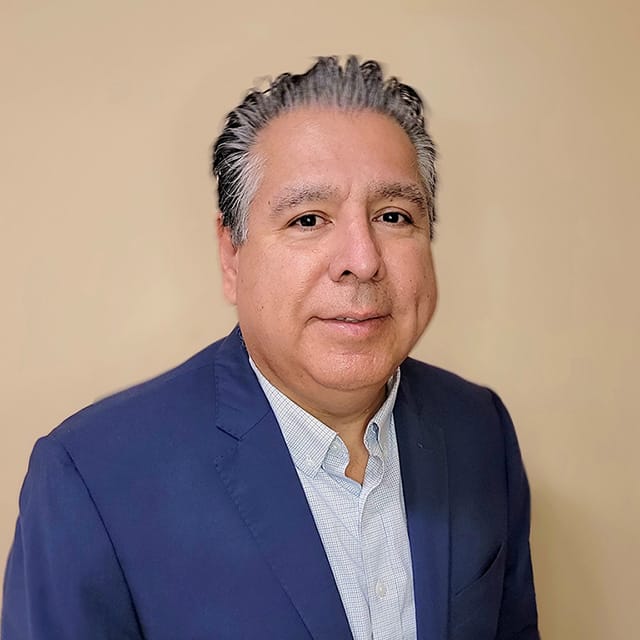
Trinidad Gonzales is co-founder of Refusing to Forget and a South Texas historian and founder and president of History Education, Research and Creative.
When U.S. Immigration and Customs Enforcement officers beat and arrested two U.S. citizens on their way to enlist in the Marines in South Texas, it struck a nerve in the community the rest of the country probably does not understand.
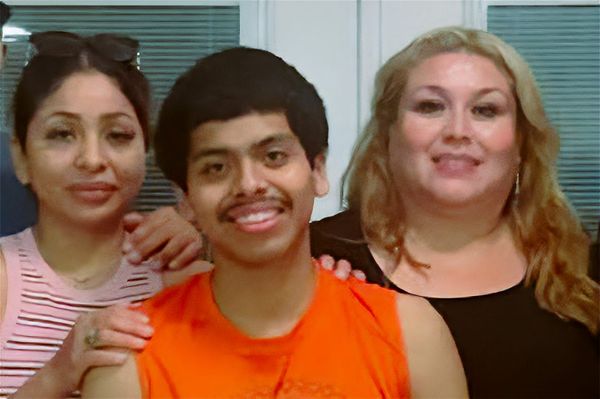
ICE officers stopped Luis Ochoa and his passenger after they filmed the arrest of a couple in front of an elementary school. According to Ochoa’s interview with Telemundo, he told the officers he and his companion were citizens, but they were still arrested and detained for eight hours.
The video of their arrest shows agents beating and pepper spraying two teenagers who were about to solidify their decision to give years of their lives to their country.
Because military service is foundational for how Mexican Americans historically claimed their rights and identity as Americans, the arrests are an attack on our Americanism.
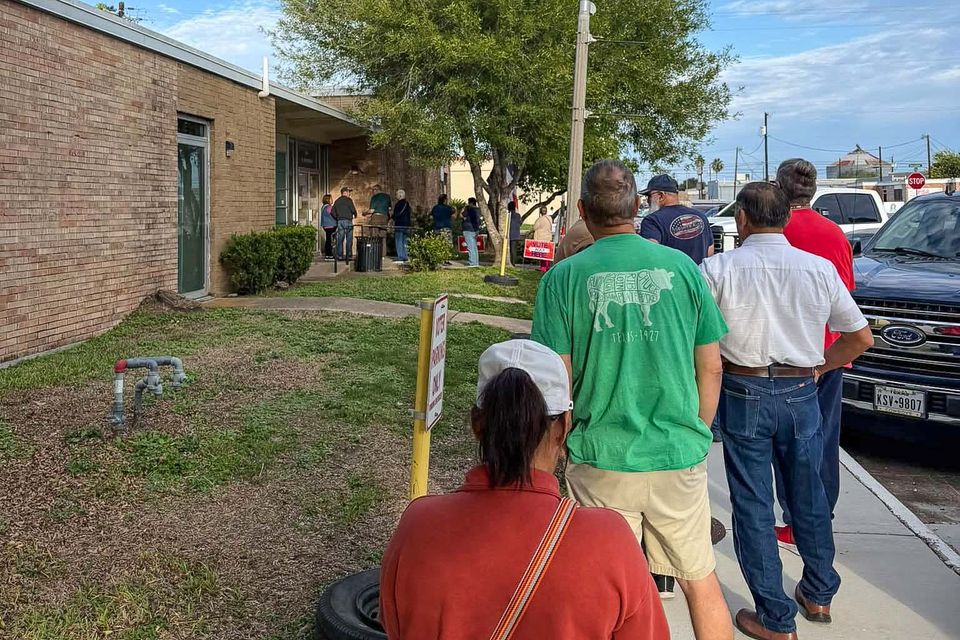
It is a wound that will follow voters into the booth this November, when three Rio Grande Valley congressional races could decide which party controls the House, after two years of Republican funding and support for the crackdowns this region has seen on its streets.
Now it may be said that South Texas is no different than any other patriotic American community when it comes to taking pride in military service.
There is a difference, though, that we can see in the historical context for why and how Mexican Americans embrace military service as foundational to their identities as Americans.
For many Americans, military service is an expression of patriotism. For Mexican Americans, it has been the answer we have given for a century to a country that keeps asking whether we belong.
To address questions of belonging and loyalty the first two major Mexican American civil rights organizations, the League of United Latin American Citizens (1929) and the American G.I. Forum (1948) promoted their Americanism through military service.
Several World War I veterans along with other prominent Mexican Americans founded LULAC. Co-founder José de la Luz Sáenz published his war diary as part of an effort to promote the idea that military service had earned Mexican Americans the right to be seen as equals and as Americans.
The American G.I. Forum was formed in 1948 by Mexican American veterans to address continued racial discrimination and likewise used their military service as the foundation for claiming equal rights and being American.
Two funerals, a generation apart, help show how deeply military service runs in the Rio Grande Valley. The first is that of Felix Longoria, a private from Three Rivers, Texas killed in the Philippines in the final months of World War II, and the second is part of an oral history passed down to me by my father, who worked at funeral homes most of his life.
No other discriminatory incident matched the Felix Longoria Affair (1948) for fueling American G.I. civil rights efforts during the late 1940s and 1950s.
Longoria was killed in action, and his remains were brought back to Three Rivers for burial. Like Mexicans throughout Texas at the time, he was to be buried in the segregated section of the cemetery. To add to that indignity the director of the sole funeral home denied Longoria’s family from using its chapel for his wake because as he stated several times, “the whites would not like it.”
In response, Dr. Hector P. Garcia, founder of the American G.I Forum, helped convince Sen. Lyndon Johnson to intervene. As a result of Johnson’s intervention, Longoria was buried in Arlington National Cemetery.
The Longoria Affair continues to reverberate among Mexican Americans in South Texas. It was one of the stories I grew up hearing as a reminder that military service is part of our heritage.
The second funeral took place a generation later, during the Vietnam War. My hometown of Edinburg, Texas, had one of the highest per capita casualty rates in the conflict. My dad constantly reminded me of this fact, especially during the bicentennial celebrations of 1976.
I remember one story he told me. At the end of a funeral during the war a father asked to unseal his son’s casket. The father wanted to verify that his son’s remains were inside by comparing the dog tag within the casket with one he was given by the Army.
When the casket was opened, only a uniform with a slight hump in the middle remained. The dog tags were cross-checked and confirmed the remains belonged to the family. He returned to his wife and told her, “es tu hijo.” It’s your son.
This was only one of several stories my father told me about our community’s military involvement and the pride we should take in the sacrifices many made for us to be considered Americans.
There is no city in South Texas that does not reference its community’s military contributions. From naming streets, schools and libraries for local military heroes to the generic use of the word “Veteran” for the same purpose.
Likewise local museums, historical markers, and memorials cite the names of service members who died in combat.
McAllen, Texas, houses the Veterans War Memorial of Texas. It is one of the largest in South Texas and Edinburg’s Boulevard of Heroes honors all veterans from the city with individual banners.
It is impossible to grow up in South Texas and not venerate military service because it is woven into us by the community’s history and values. It is how we see ourselves as being American.
That is why ICE arrests in the region create a precarious political position for South Texas Republicans like Rep. Monica De La Cruz, who continue to support Trump’s campaign of mass deportations. Many of the same veterans who have voted for Republicans in the past, also fought to defend the same freedoms they are now watching ICE agents trample on the streets of the Rio Grande Valley. In the city of Alamo, those agents turned on two young men on their way to serve.
To not denounce the arrests is a rejection of Mexican American identity. A rejection of our Americanism.
Keep Reading on ATA
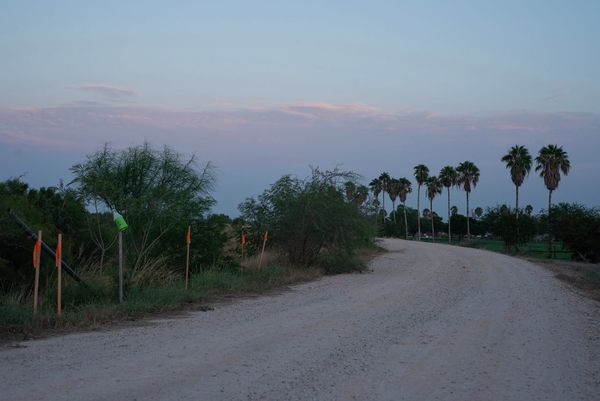
Hidalgo County irrigation district is now also suing the federal government over the border wall at Santa Ana Wildlife Refuge
A July suit named two construction companies, while the September filing adds the U.S. government and seeks a permanent halt to work on the border wall at the refuge.
Rep. Cuellar requests body cam footage in U.S. citizen Alamo teens ICE arrest case
One teen alleges officers broke his wrist and deported his mother in retaliation. DHS disputes the account of the arrest, calling the pair "anti-ICE agitators" who obstructed officers.
Alamo teen arrested on video says ICE detained his mother, and local advocate says she was deported
Luis Ochoa, whose arrest by ICE agents in Alamo was caught on video, says his mother was detained Monday after she spoke out online. An advocate says she has already been deported.