Across The Americas is the newsletter of independent journalism from the Rio Grande Valley, covering the Texas-Mexico region from a global lens.
Your information is always private.
BROWNSVILLE, Texas — A coalition of community groups, nonprofit advocacy organizations and local businesses hand-delivered a letter to the Brownsville City Commission during a commission meeting Tuesday night, asking for more say on rules for data centers and a 180-day moratorium on any new projects.
In the letter, the coalition says it wants the commission to put together a task force made up of Brownsville residents who have no ties to data center projects or related business interests. Through this city commission task force, the civic groups want to collaborate with commissioners to write the ordinances that will govern data centers in the city.
John Cuvillier is co-chair of the anti-data center campaign at the Rio Grande Valley chapter of the Democratic Socialists of America. Cuvillier said the task force is meant to establish a seat at the table for working-class people. The chapter was one of 15 organizations that signed the letter delivered Tuesday.
“These are the stakeholders that will actually work on these projects and live around the data centers and face the consequences of their development,” Cuvillier said. “We want to see as many people as possible involved in the public process to draft this ordinance. This isn't about one group over another. It's about all of the residents of Brownsville coming together to shape our future.”
Last month, a private company asked the city for a permit to build a data center on Padre Island Highway. Public backlash on social media ensued, and the company withdrew its request for an unknown reason.
That is when the city announced it would consider a 90-day moratorium on several types of businesses, including data centers, to allow the time necessary to create an informed ordinance on new projects. The coalition is asking for a moratorium at least twice that long, among its other demands.
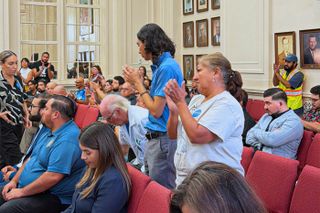
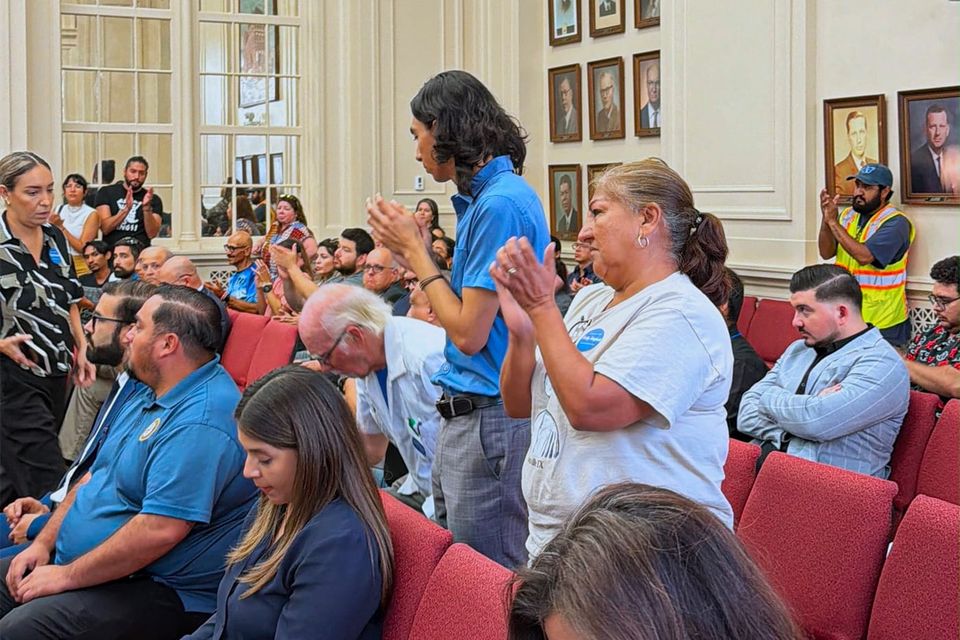
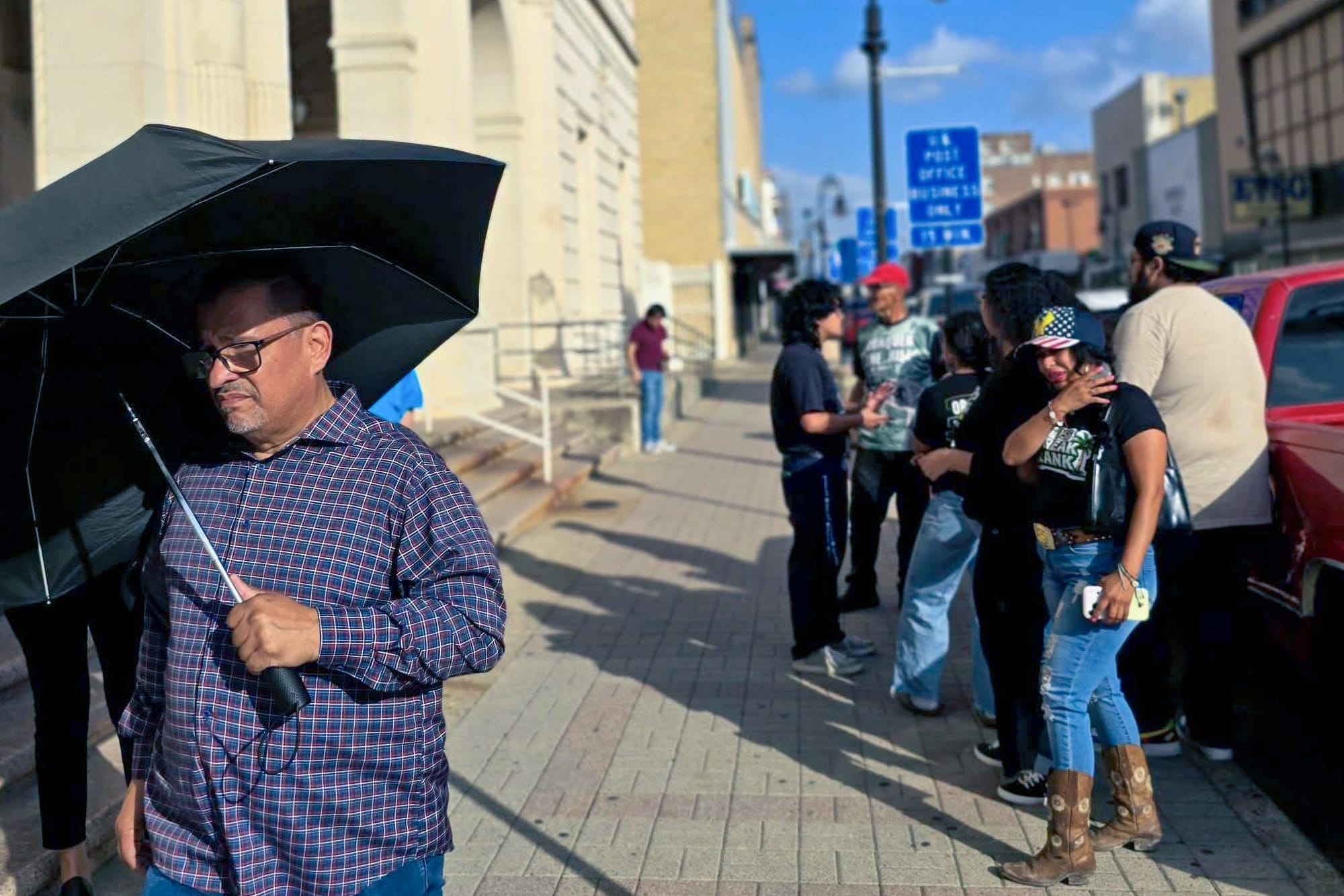
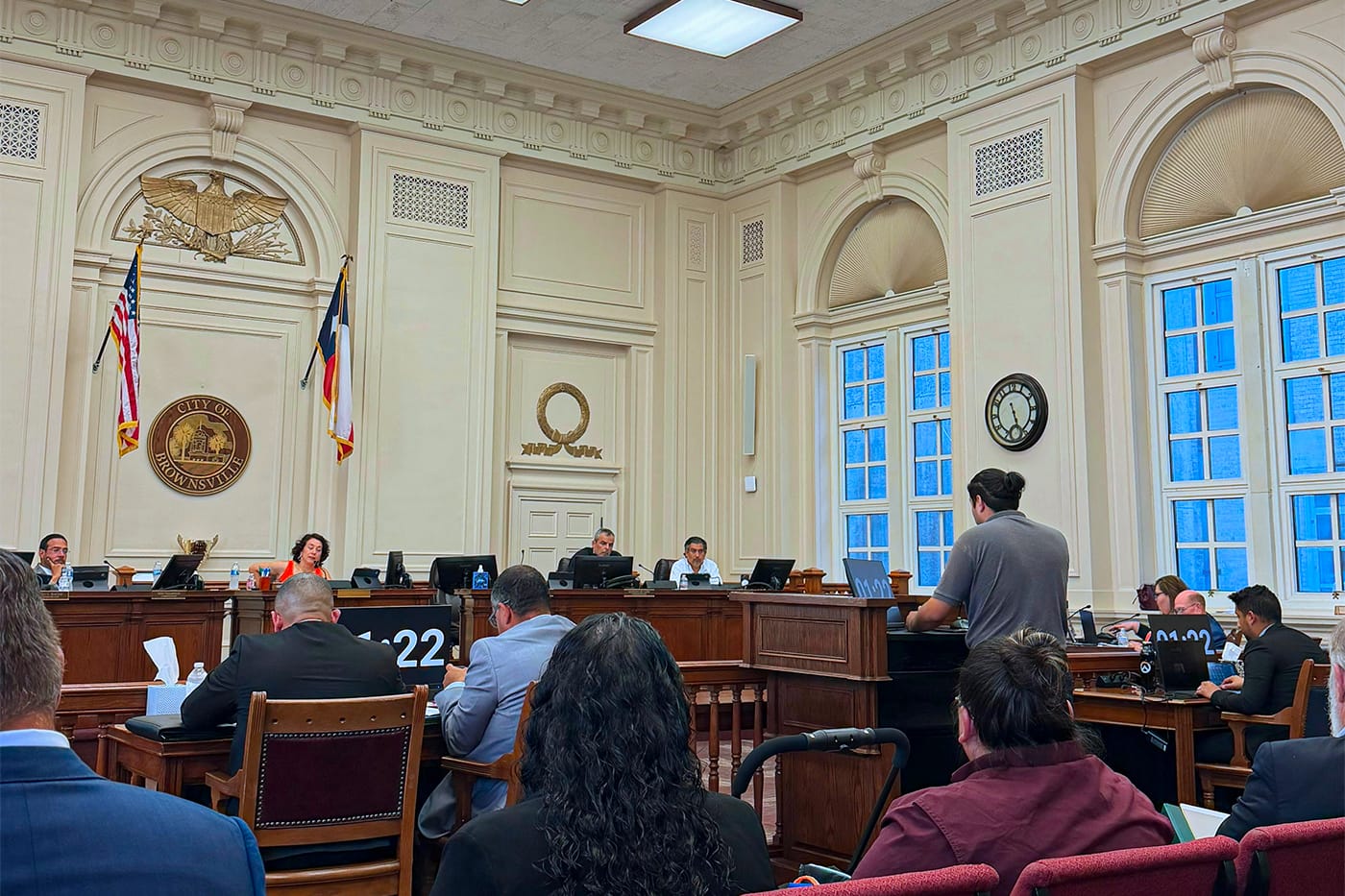
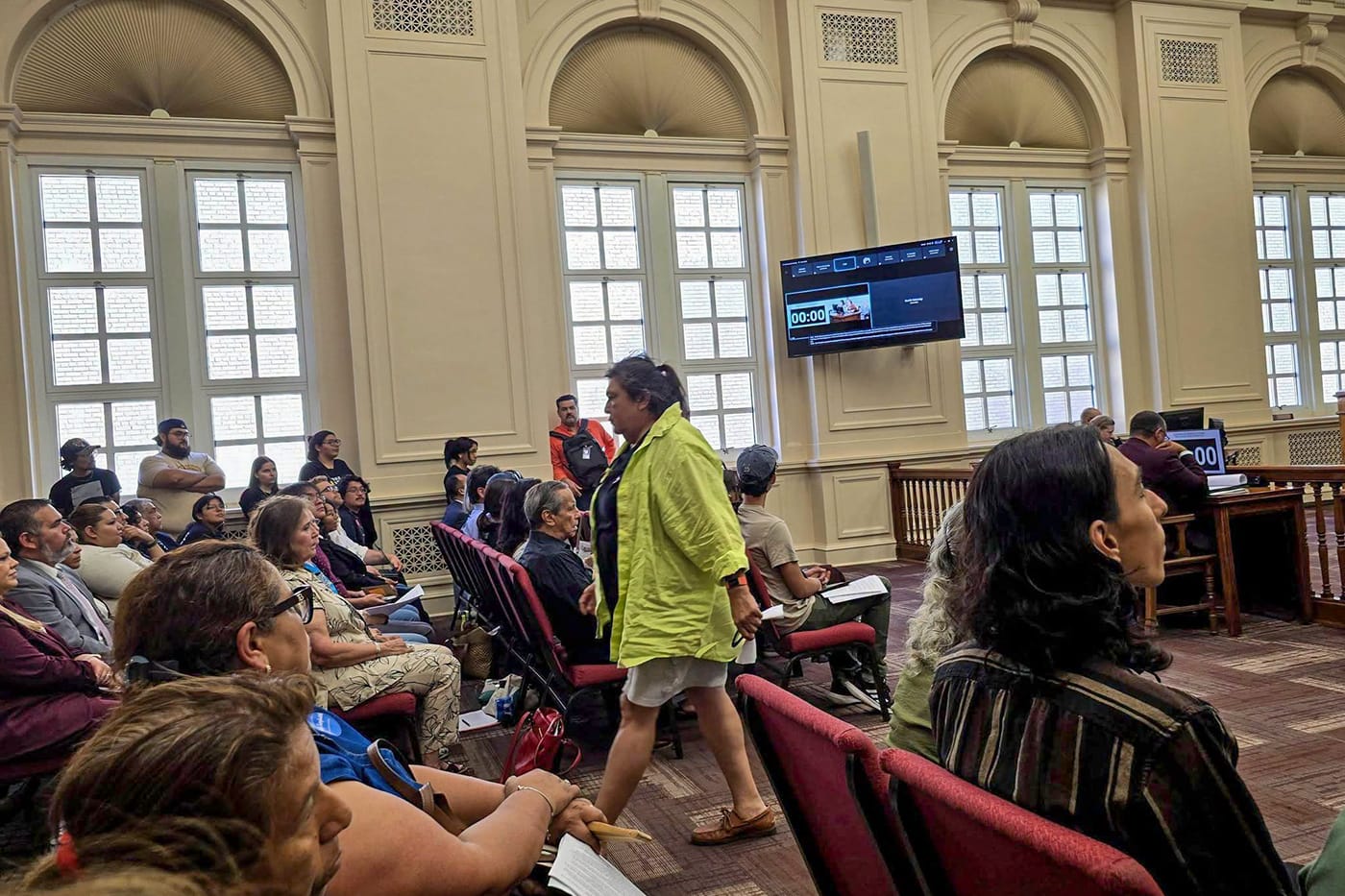
On Tuesday, Brownsville City Hall filled to capacity for the second time since that permit request was filed, with 26 residents registered to give public comment opposing data centers at the commission meeting. The commission carried a motion to suspend its rules and allow all 26 to speak.
Annalise Rosas grew up in Brownsville and is a member of DSA RGV. She gave public comment that reflected a common thread in Tuesday's meeting about the social and environmental costs of new industrial projects in the region.
“When I hold my daughter and sit outside, I find myself admiring the things that make Brownsville beautiful, the birds, the trees, and the ocean nearby, and instead of embracing the moment like I used to as a kid, I find myself feeling scared of this all going away,” Rosas said from the podium on Tuesday.
“I'm scared that my baby will grow up and see a Brownsville that I don't recognize, full of concrete, industrialization, noise pollution, air pollution, toxic waste,” Rosas said.
The health and environmental effects of data centers in 2026 are real and well documented, including from resource depletion, air pollution and PFAS, also known as “forever chemicals.”
In one example, a 2024 study by scientists at UC Riverside and the California Institute of Technology found air pollution produced by the data centers that power AI will be strong enough to cause 1,300 premature deaths across the country by 2030. The authors also found that data center pollution already disproportionately affects low-income communities.
Air pollution from data centers will be especially impactful in Texas. Many facilities in the state will not be able to draw power from the state's power grid, as interest in grid connections exceeds the entire capacity of the state grid many times over. As a result, gas and diesel powered generators are expected to take on the extra load.
Studies showing the effects of data centers on health and the environment
The letter delivered by the coalition Tuesday listed several demands for how the city should write the ordinance, including two public hearings with Spanish interpretation and a way for residents to comment online.
The letter also included rules the groups want in a data center ordinance for Brownsville, including barring the Public Utility Board of Brownsville from supplying water or electricity to data centers, noise limits and prohibit data center facilities in surrounding colonias, the unincorporated border communities that often lack basic infrastructure.
What Valley civic organizations are asking from the city of Brownsville on data centers
Across the Americas reached out to the city of Brownsville to ask whether such a collaboration was possible, but the commission was not available to provide a comment by the time of this publication.
Brownsville Mayor John Cowen Jr. told the Rio Grande Guardian this month that “there is probably a path forward to a win-win” but thinks the projects will have to be considered “on a case-by-case basis.” Cowen told the publication that the city is moving toward a framework that will help it reap the economic benefits of AI.
Technology policy researchers view local moratoriums like the one being considered by Brownsville now as a positive first step, but say that working through the politics of the issue will require cities to do exactly what the civic groups in the Rio Grande Valley asked for on Tuesday night.
In a July commentary for Brookings' Center for Technology Innovation, director Nicol Turner Lee and senior fellow Darrell M. West said that moratoriums “are not a complete solution to the problem at hand.” They said transparency and public input must also play a role.
“For moratoriums to work, there must also be time spent gathering data, enhancing transparency, and creating greater collaboration among legislators, industry, and community residents,” wrote the researchers.
Cuvillier said the city has not been responsive to civic advocates and that no one from the commission has reached out on the topic of data centers to any of the community organizations involved.
“As of right now, we think the city commissioners and the mayor are being very careful with the way they talk about data centers,” said Cuvillier. “They've already signed NDAs with other companies so we have no reason to believe that they might not do the same with a data center corporation.”
Every state now has at least some counties or cities who have enacted local moratoriums on data centers, most as a result of public pressure. Last month, more than 140 protests were staged by local residents against the facilities across the country.
Republicans who once cheered the AI boom are changing their message as voters push back. A private memo from the Senate GOP campaign arm to AI companies, surfaced by Axios this week, warns that if Republicans lose a key Ohio Senate race over data centers, the campaign against them will spread well beyond that state by Democrats.
Like in many of the places where residents are pushing back, the topic of data centers in the Rio Grande Valley has become a lightning rod for wider frustrations with local government, mobilizing residents to bring up long-neglected issues like rising utility bills, water scarcity and secrecy around development deals.
Yolanda Speece, a resident of Brownsville and a retired radio broadcaster, told the commission on Tuesday that her family trusted the city with their lives and feels now that the commissioners betrayed their oath of office.
“Four of you will be up for re-election next year. We are your boss. We supervise and give the necessary marching orders. So get your boots on. You're going to be knee deep,” Speece said during her public comments. “We can't spare resources so you can get your blood money.”
Turner Lee and West said that since data centers “require meaningful accountability and oversight in both the short and long term,” failing to include residents along with industry means “community upheavals are likely to persist.”
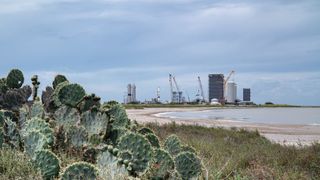
In Brownsville and Cameron County, the national trend is complicated further by the region's addition of large industrial projects in recent years, including liquefied natural gas terminals and pipelines, SpaceX, a shipyard built by Saronic Technologies and a planned oil refinery. Some residents have opposed special tax abatement deals and environmental impacts on those projects as well.
But oversight is split among several governing bodies, including the county, the city, the port district, and Starbase, the new municipality built around SpaceX. That makes it harder for residents to know who is in charge, and city commissions are not always involved.
Cuvillier, speaking broadly about the various industrial projects in the Rio Grande Valley, stepped back to explain what DSA means to them and why they organize with the group.
“What democratic socialism means to us is creating more democracy,” Cuvillier said. “We want democracy to extend beyond the ballot box and into our communities. We want workers and families in the Rio Grande Valley to have more of a say in the direction of their own lives."